Clinical GradeFDA Cleared
For Wound Care
Perry Baromedical
Multiplace Series
Hard-Shell Multiplace·2-18+ person
Pressure3 ATA
$150,000 - $400,000+
MS-specific HBOT research dates to 1983. Cochrane review found inconclusive disease progression evidence — but symptom relief (fatigue, bladder, spasticity) is better documented.
Hyperbaric oxygen therapy (HBOT) for Multiple Sclerosis (MS) has limited clinical evidence. This is currently an off-label use and is not covered by insurance. The recommended protocol is 1.75–2.0 ATA ATA for 60–90 minutes per session per session over 20 initial sessions + maintenance sessions.
Key Takeaways
Multiple sclerosis is an autoimmune disease of the central nervous system in which the immune system attacks myelin — the protective sheath around nerve fibers — causing lesions, nerve damage, and progressive disability. HBOT has been studied as a potential treatment for MS since the early 1980s, making it one of the longest-running off-label hyperbaric indications. The United Kingdom has a notable network of MS-specific HBOT centers, many operated by MS charities, where low-cost HBOT is available to members. The evidence base for HBOT in MS is genuinely mixed and has been the subject of a Cochrane systematic review — generally considered the gold standard for evidence evaluation. The Cochrane review found insufficient evidence to conclude that HBOT modifies MS disease progression or prevents relapses. However, the review and individual studies have documented improvements in specific symptoms — particularly bladder function, fatigue, spasticity, and quality of life — suggesting that HBOT may offer palliative benefit even if it does not alter the underlying disease course. It is important to be honest about what the evidence shows: HBOT is unlikely to stop MS in its tracks or reverse established neurological damage. It may meaningfully improve day-to-day symptom burden for some patients, and research into neuroprotective mechanisms (BDNF upregulation, anti-inflammatory effects) continues. This is an area where patient experience and clinical trial data sometimes point in different directions.
Several mechanistic pathways have been proposed. Demyelinated nerve fibers have reduced conductivity — if the tissue surrounding them is hypoxic (as some MS research suggests), then increased oxygen delivery via HBOT could improve conduction in borderline nerve fibers. HBOT also has anti-inflammatory effects: it suppresses pro-inflammatory cytokines and activates anti-inflammatory pathways, which may reduce the autoimmune activity driving demyelination. More recent research has explored BDNF (brain-derived neurotrophic factor) and NGF (nerve growth factor) upregulation under HBOT — both factors support neuronal survival and may contribute to remyelination. However, the clinical translation of these mechanisms to meaningful disease modification in MS remains unproven.
Recommended Protocol
Pressure
1.75–2.0 ATA
Sessions
20 initial sessions + maintenance
Duration
60–90 minutes per session
Fischer et al. (1983) published the first major MS-HBOT trial in the New England Journal of Medicine: 40 patients randomized to 1.75 ATA HBOT vs. sham showed modest improvement in bladder function and some neurological measures at 1 year. This generated significant interest but results were inconsistent across subsequent trials. Bennett & Heard's Cochrane review (2004, updated 2010) analyzed 9 RCTs involving 504 patients and concluded: no convincing evidence that HBOT improves disease characteristics or prevents progression, but evidence of modest improvement in bladder function. Individual studies have reported improvements in fatigue, spasticity, and quality of life. The UK MS therapy centers have large patient registries suggesting symptomatic benefit for many users. Current evidence supports a trial for symptom management rather than expectation of disease modification. Patients on disease-modifying therapies (interferons, natalizumab, etc.) should not substitute HBOT for their prescribed treatment.
Off-Label Use
Multiple Sclerosis (MS) is not an FDA-approved indication for HBOT. Treatment is considered off-label and is typically not covered by insurance. Consult your physician before starting any HBOT protocol.
Based on the protocol requirements — minimum 1.75 ATA, Clinical Grade tier. Sorted by clinical credibility score.
Perry Baromedical
$150,000 - $400,000+
Perry Baromedical
$50,000 - $90,000
Perry Baromedical
$55,000 - $95,000
Perry Baromedical
$65,000 - $110,000
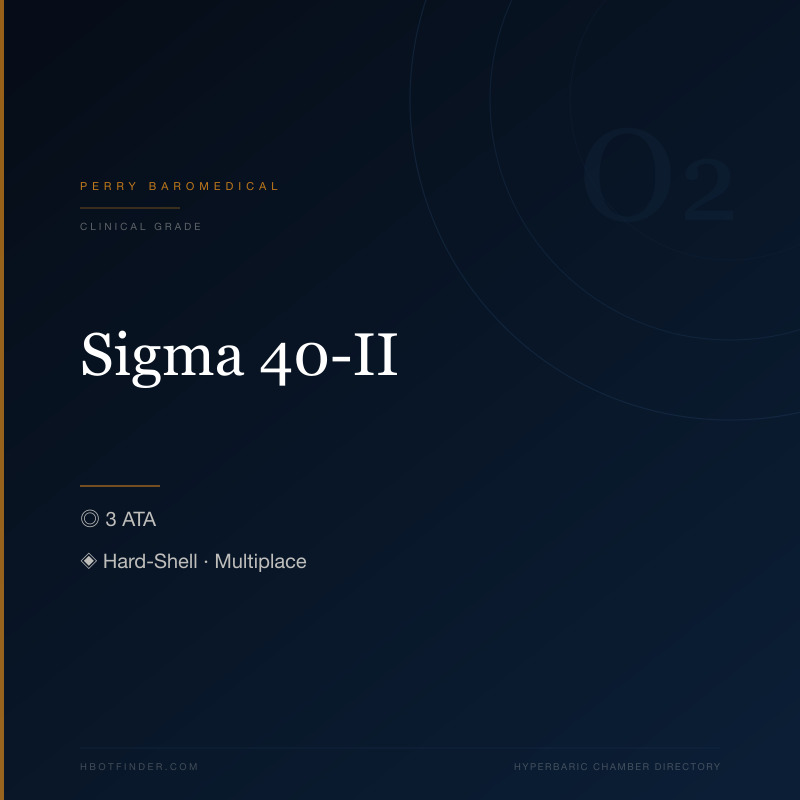
Perry Baromedical
$100,000 - $160,000
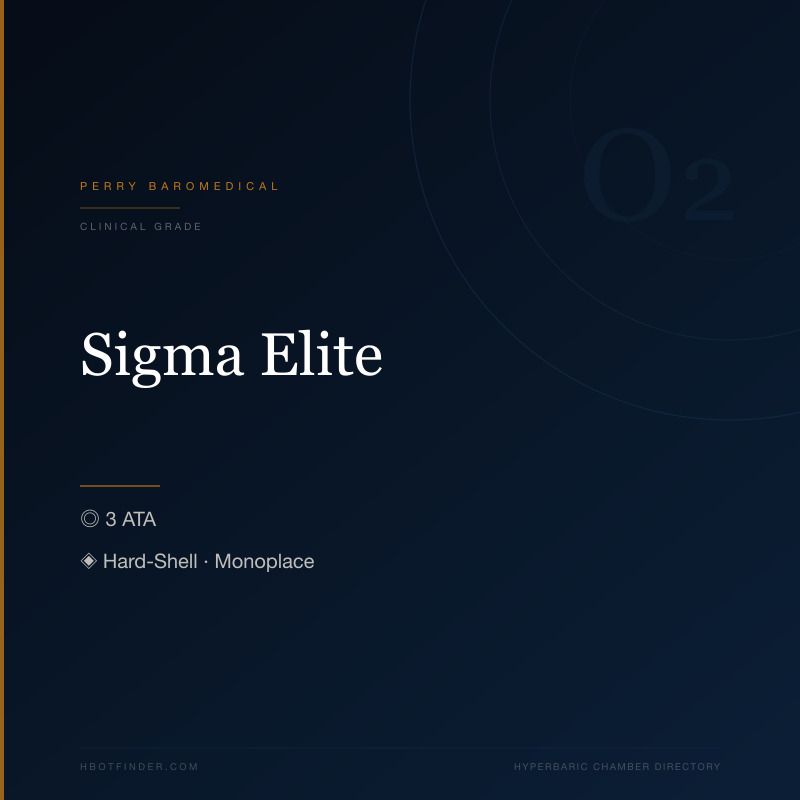
Perry Baromedical
$80,000 - $130,000
Based on current evidence, no — the Cochrane systematic review found no convincing evidence that HBOT prevents MS progression or relapses. What is better documented is symptom improvement (bladder function, fatigue, spasticity) in some patients. HBOT should not be considered a substitute for FDA-approved disease-modifying therapies. If you are on a DMT, continue it — HBOT may be considered as an adjunct for symptom management with your neurologist's input.
Most MS-HBOT research has involved mixed populations, making it difficult to draw firm subgroup conclusions. Theoretically, HBOT may be more likely to benefit patients with reversible inflammatory activity (relapsing-remitting) than those with established axonal loss (progressive). The Fischer 1983 study found better responses in patients with less severe disability. In practice, UK MS therapy centers treat both types, and many progressive MS patients report symptomatic benefit even if disease modification is unlikely.
The UK has approximately 70+ MS therapy centers — charitable organizations that offer low-cost HBOT specifically to MS patients. Membership typically costs £50–£100/year with sessions available for £10–£25 each. These centers arose partly from the early enthusiasm following the Fischer 1983 trial and have accumulated substantial patient experience data. They are UK-based (visit mstrust.org.uk or the MS Society UK for a directory) but represent a unique resource. If you are in the UK with MS, this is likely your most accessible HBOT route.
In the US and other countries without the UK charity model, HBOT at clinical facilities runs $150–$350 per session. A 20-session initial protocol costs $3,000–$7,000, followed by ongoing maintenance sessions. Insurance does not cover HBOT for MS. This cost burden is significant and should factor into any decision — especially given the mixed evidence for disease modification. If considering HBOT for MS, prioritize facilities with experience treating neurological conditions.
The most consistently reported improvements across studies and patient registries are bladder function (the Fischer 1983 trial's strongest finding), fatigue, and spasticity. Some patients also report improvements in visual symptoms, balance, and cognitive clarity. These improvements tend to be partial and may require maintenance sessions to sustain. Cognitive and mobility improvements are reported less consistently across studies but are common anecdotal reports from MS therapy center patients.
Last updated: March 2026. Data sourced from manufacturer specifications, FDA databases, and published clinical research.
Use our filterable directory to find chambers that match your protocol requirements.